There’s a moment, usually around 2 a.m., scrolling on a phone that’s somehow always at 12% battery, when you add something to a cart you didn’t know existed four minutes earlier. A gadget. A jacket. A “smart” version of a thing that has worked perfectly well, dumb, for a hundred years.
You click buy. For about ninety seconds, you feel better.
Then the feeling’s gone, and you’re right back where you started, except now there’s a package coming, a credit card statement waiting, and a slightly heavier pile of stuff that will one day sit in a landfill wondering what it was all for.
I used to live like that. Now I live off-grid, eat one meal a day, and mostly just eat meat and eggs. And somewhere in that stripped-down life, I stumbled onto something that all the productivity blogs and minimalist Instagram accounts talk around but rarely say outright:
You don’t actually own anything. You’re just temporarily holding it while your anxiety looks for its next target.
Let me explain.
The Illusion of Ownership

Legally, sure, you own your car, your house and your espresso machine with the eleven attachments you’ve used twice. But ownership was never really about having the thing. It was about what the thing was supposed to fix.
Bored? Buy something. Lonely? Buy something. Anxious about the future? Buy insurance for the thing you bought to fix being anxious.
The stuff was never the point. The stuff was a stand-in for a feeling you were chasing: safety, status, belonging and control. And feelings are notoriously bad at being satisfied by objects, which is why the buying never really stops. You don’t run out of money before you run out of want.
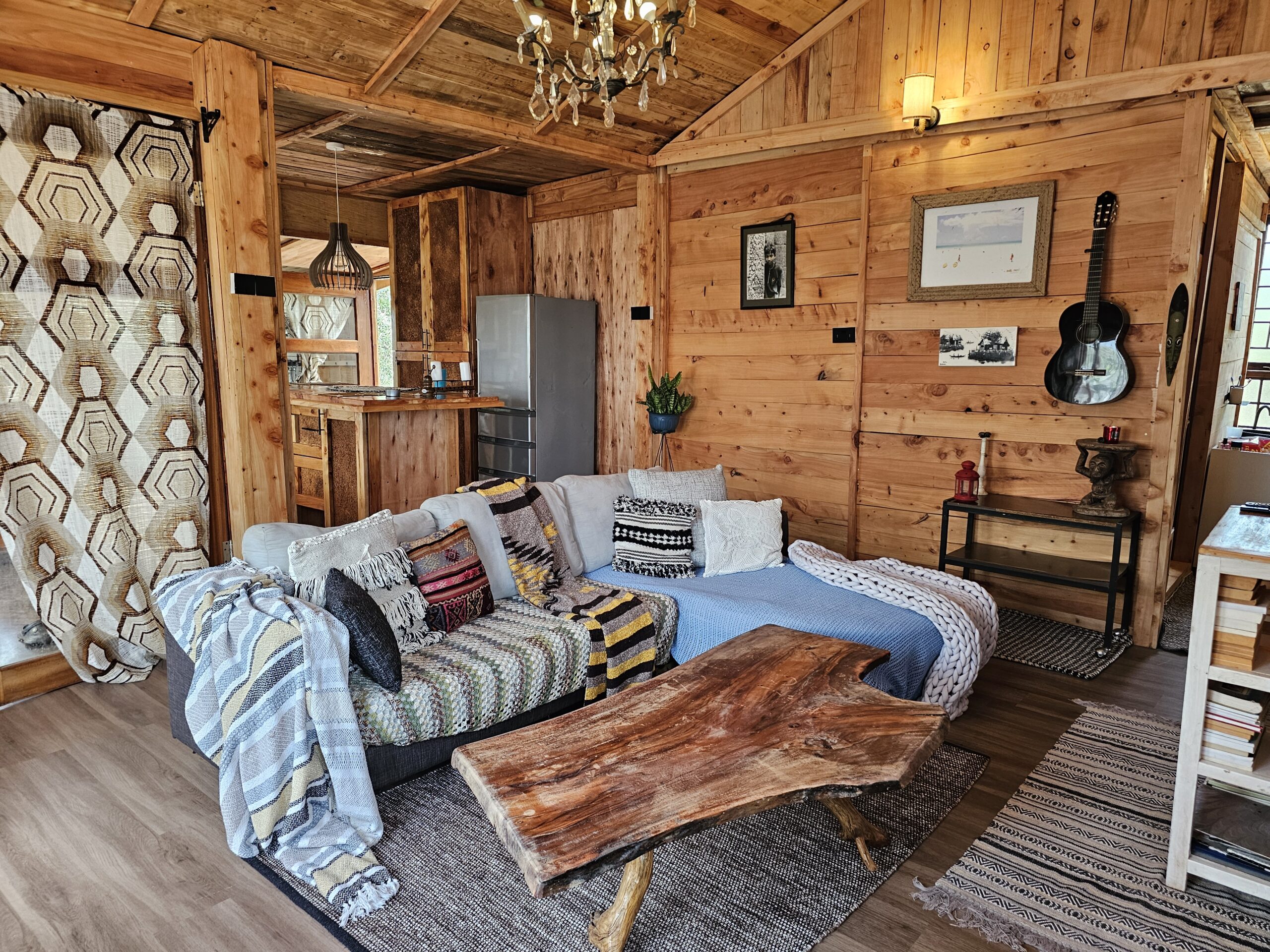
Off-grid life makes this brutally obvious, because suddenly there’s no delivery truck coming up the drive. No two-day shipping. No “just add to cart and forget about it.” If you want something out here, you have to really want it, haul it, store it, power it, maintain it or do without. That filter changes everything. Most of what I thought I needed turned out to be noise I’d mistaken for a signal.
Off-Grid Living Strips the Noise
Living off-grid isn’t an aesthetic. It’s a forcing function.
When your power comes from the sun and your water comes from a tank you refill yourself, every object in your life has to justify its existence. Does it earn its keep? Does it need constant charging, replacing, or upgrading? Or does it just… work?
This same filter, does it earn its keep? It eventually crept into how I ate. Which is where the carnivore, one-meal-a-day thing comes in.
One Meal a Day: The Diet Version of Owning Less
Modern eating has the exact same problem as modern shopping. Six meals a day. Snacks between snacks. Meal-prep Sundays with seventeen Tupperware containers and a spreadsheet. An entire industry exists to sell you the idea that eating well requires constant decision-making, constant purchasing and constant management.
It doesn’t.
Here’s what nobody tells you about eating one meal a day on a carnivore diet: it’s not restrictive; it’s liberating, in the exact same way owning fewer things is liberating. You stop managing. You stop deciding. You stop buying “just in case” groceries that go bad in the back of the fridge, a smaller, colder landfill of good intentions.
My meal planning now looks like this:
- Meat. Cook it. Eat it.
- Or eggs. Same deal.
- Done.
No macro apps. No seven-ingredient sauce. No decision fatigue at 6 p.m. when you’re tired and the fridge is full of stuff that requires “assembly”. One trip to a shelf-stable protein, one fire or one pan, one sitting. Fasting the rest of the day isn’t a punishment; it’s just an absence of a problem I used to think I had to solve six times daily.
There’s something almost meditative about it. You eat when the sun tells you the day is done, the same way you charge your batteries when the sun tells you the day has begun. Everything lines up with fewer inputs, fewer decisions, fewer things to own or manage.
The Stuff You Don’t Buy Is the Stuff That Frees You
Here’s the pattern, if you haven’t already spotted it:
Every “convenience”, the extra kitchen gadget, the fourth streaming subscription, the snack drawer, the gear you bought for a hobby you tried twice comes with a maintenance tax. Time, money, mental bandwidth and storage space, literal or otherwise. Nothing you own is free once you own it. It all asks something of you, forever, in exchange for the ninety seconds of relief it gave you at checkout.
Living off-grid taught me to ask, before I bring anything into my space: what will this cost me after the purchase is over?’
Eating one meal a day taught me the same lesson about food: what will planning this cost me, every single day, for the rest of my life?
Once you start asking that question about everything, objects, meals, subscriptions, relationships, and obligations, the appeal of “more” starts to look a lot less like freedom and a lot more like a slow-motion trap dressed up as a treat.
You Can’t Buy Your Way Out of Wanting
This is the part that took me the longest to actually believe, not just understand intellectually: the urge to acquire doesn’t go away because you got the thing. It goes away when you stop needing the thing to mean something it was never going to mean.
Off-grid living didn’t kill my desire for stuff by giving me less access to stuff. It killed it by making the cost of stuff visible again, the hauling, the powering, the storing and the fixing. Eating one meal of meat or eggs a day didn’t kill my relationship with food by restricting it. It killed the noise around food, the constant negotiating, snacking, deciding and left just the actual, simple, satisfying act of eating when I’m hungry and stopping when I’m done.
Neither of these is about deprivation. That’s the part people get wrong when they hear “off-grid” or “OMAD carnivore” and assume it’s some kind of monk-like suffering. It’s the opposite. It’s what’s left over when you stop paying rent to your own restlessness.
So, Do You Own Anything?
Not really. Not in the way that matters. You own the maintenance schedule. You own the storage problem. You own the decision fatigue. The object itself is just the receipt.
What you do own fully, without any hidden cost, is your attention, your time and, if you’re lucky, one good meal a day that actually satisfies you instead of just filling a slot in a schedule someone else designed for you to be busy enough to keep buying things.
Out here, with no grid to plug into and no fridge full of options, that’s become obvious in a way it never was before. Maybe you don’t need to move off-grid or eat only meat and eggs to feel it too. But it might be worth asking, next time you’re hovering over “add to cart” or standing in front of an open fridge deciding on meal number four of six.
What are you actually hungry for?